Categories
Blogging Driving Food Geography History Travel

Bartow Florida

Welcome back to #TravelThursday. 8 days ago I spent some quality time in historic downtown Bartow Florida. It’s a part of Bartow that’s often overlooked by those just passing through along U.S. 17 and U.S. 98 (north-south) and Florida State Road 60 (west-east). I was with 9 of my Sebring Historical Society friends last Wednesday on a fun fact-finding mission to explore how other museums operate.

We started our fun at the intersection of Main Street and Broadway Avenue which serves as the “zero-point” of the city’s grid. All addresses – north-south and west-east – begin at that intersection.

We enjoyed Lunch at Palace Pizza at 105 East Main Street. I had 2 hot and delicious slices of pepperoni pizza and 3 soft and juicy garlic rolls. #Yum

After Lunch we walked across the street and entered the historic Polk County History Center. It’s located in the former courthouse building at 100 East Main Street. It’s their county museum, and it’s quite extensive on 2 out of 3 floors. The 1ST floor houses all of the exhibits – permanent and temporary – while the 2ND floor houses their archival library. (The 3RD floor is generally not open to the public; although, our group got a nice private tour of it – mostly utilized for storage and more archives.)

The museum is open 5 days a week from Tuesday to Saturday from 9 AM to 5 PM. Admission is free.

Fun Facts: The Polk County Courthouse building was built in 1908 and 1909. It was added to the U.S. National Register Of Historic Places on August 07TH 1989. The current courthouse is located a couple of blocks away at 225 North Broadway Avenue. Bartow is the County Seat of Polk County. Over 800,000 residents call Polk County home.

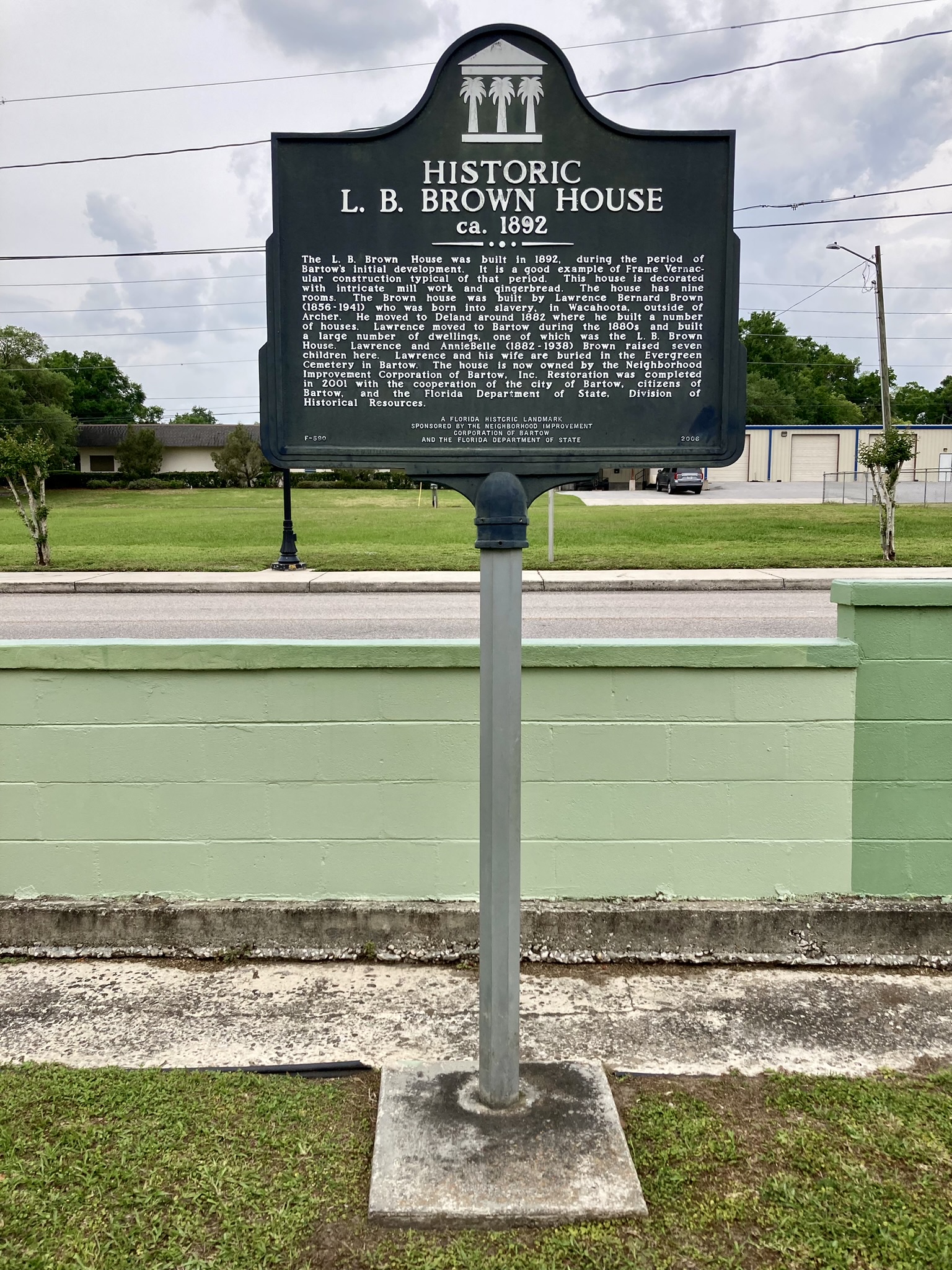
We also visited the Historic L.B. Brown House museum less than a mile away along South L.B. Brown Avenue. (It too is on the U.S. National Register Of Historic Places.) We were warmly greeted by 2 friendly docents, and they treated us to an extensive tour of the exterior grounds as well as the interior of the house. They shared lots of stories along with historical photos and documents. They were enthusiastic to tell the stories of the man, his family, and the house.

Next #TravelThursday – I’ll write about my morning with the mermaids of Weeki Wachee Springs Florida. Let’s keep traveling together.

All rights reserved (c) 2024 Christopher M. Day, CountUp
Categories
Blogging Driving Geography History Travel

On The Road Again

Welcome back to #TravelThursday. 10 days ago – I took a nearly spontaneous day trip over to Lakeland. I briefly considered Lakeland as a retirement location several years ago. It’s a rapidly growing city (and metropolitan area) along I-4 between Tampa and Orlando with all of the big box stores and chain restaurants – and all of the traffic that goes along with it. Located just shy of 60 miles from home near Sebring – some 125,000+ residents call Lakeland home, but perhaps close to 800,000 people live in its metro area.

This short day-trip served a few purposes. I wanted to experiment with a somewhat non-traditional way of driving to Lakeland – by staying on U.S. 98. (My neighborhood is located along the concurrence of U.S. 27 and U.S. 98.) About 14 miles north – U.S. 98 splits away from U.S. 27 and heads westward to U.S. 17 where the two old U.S. highways form a concurrency to Bartow. (U.S. 98 then continues northwestward by itself to Lakeland and beyond.)

It was a nice drive along U.S. 98. I actually enjoyed a late-Breakfast at a popular local diner in Fort Meade. I think I may have driven through Fort Meade on a previous road-trip many years ago. It deserves its own edition of #TravelThursday, as I’d like to explore more of this historic small town – including the Museum presented by my brothers and sisters at the Historical Society of Fort Meade.

(On that day trip of 10 days ago – I ended up taking the more traditional route of Florida State Road 60 eastward from Bartow to U.S. 27 and then southward to return home.)

That day trip served as a “dress rehearsal” of the start of my upcoming retirement road-trip. It’s a road-trip that’s nearly 40 years in the making. I’ve frequently dreamed of taking a long road-trip clockwise around the perimeter of the country at the start of my retirement. I envisioned driving some 10,000 miles from Florida to Texas to California to Washington and then along I-90 from coast to coast across the northern U.S and then down the Eastern Seaboard back home to Florida.

My actual road-trip will be a much scaled-down version of those lofty dreams. I’ll be staying south and driving to and from North Texas via two different routes while mostly avoiding the Interstate. I’ll be journaling my life and times while on the road again. It’ll provide plenty of material for #TravelThursday through the next several months. I hope that you’ll hop along for a virtual ride !

Next #TravelThursday – I’ll write about a couple of historic museums in Bartow Florida. Let’s keep traveling together.

All rights reserved (c) 2024 Christopher M. Day, CountUp

Categories
Blogging Geography Travel Weather

El Niño Winter

Welcome back to #TravelThursday. Exactly 22 weeks ago I wrote about the impending El Niño Winter which had already gotten off to a strong start with severe weather and record-cold temperatures so early in the season (middle of October).

We’re now on the other side of that quite unusual winter season, and I have the final report right here.

This actually made national news early in February: It was apparently the cloudiest / gloomiest December and January in modern recorded history in Central and South Florida. (Records go back to 1941.) Cloud cover was about 70% of the time during those 62 days – almost double the average percentage.

It was also a consistently chilly winter season – but not record-breaking. In fact – it was quite an “average” winter season as far as temperatures were concerned – with no extremes. Here in South Central Florida – 40s in the morning were very common – more common than normal – but 30s were rare – mostly confined to pockets of North Central Florida. Here in Sebring – we had no 30s at all, but we had 38 mornings in the 40s. (This is actually the first winter season that I’ve personally collected weather data for Sebring, so I can’t compare that to previous seasons.)

Mornings in the 40s by month:
November = 3
December = 8
January = 14
February = 12
March = 1

We also had 22 days where we were stuck in the 60s. Combined – we had 60 days and nights with highs in the 60s or lows in the 40s. Those are called “cool” days, and they represent the number of days where the temperature did not reach 70°F plus the number of nights where the temperature dropped below 50°F.

While I was living down in Homestead Florida (South Miami-Dade County) – I was used to about 15 “cool” days per winter season (usually about evenly split). This season – Homestead recorded only 4 “cool” days – all days just below 70°F. For the first time in modern recorded history – no 40s were recorded during the entire winter season, but there was an abundance of early-morning temperatures in the 50s (more than normal). Excessive cloud cover prevented maximum radiational cooling, and that kept many of the usual 40s from occurring.

Rainfall-wise it was a little wetter than normal during the peak of our dry season (7 months in South Florida / 8 months in Central Florida). In fact – some portions along our immediate Gulf Coast actually received more rain during this El Niño Winter season than they did during the rainy season last summer. El Niño has actually ended an extreme drought along the coast.

It was a strange winter season due to a strong El Niño. It was the strongest El Niño since the strongest one ever recorded 8 years ago at the end of 2015. It’s now starting to wane, and perhaps we’ll get a La Niña develop before the end of the year. Some forecasters believe that a La Niña could even develop as early as this summer, but I’m thinking that it’ll be a slower transition from El Niño to Neutral to La Niña during the rest of this year.

Want to learn more about El Niño (and La Niña) ? The NOAA does a very good job of explaining it here.

Next #TravelThursday – I’m on the road again on a trip that’s nearly 40 years in the making. Hopefully the weather cooperates. Let’s keep traveling together.

All rights reserved (c) 2024 Christopher M. Day, CountUp

Categories
Blogging Driving Food Geography History Nature Photography Travel

Sugar Express

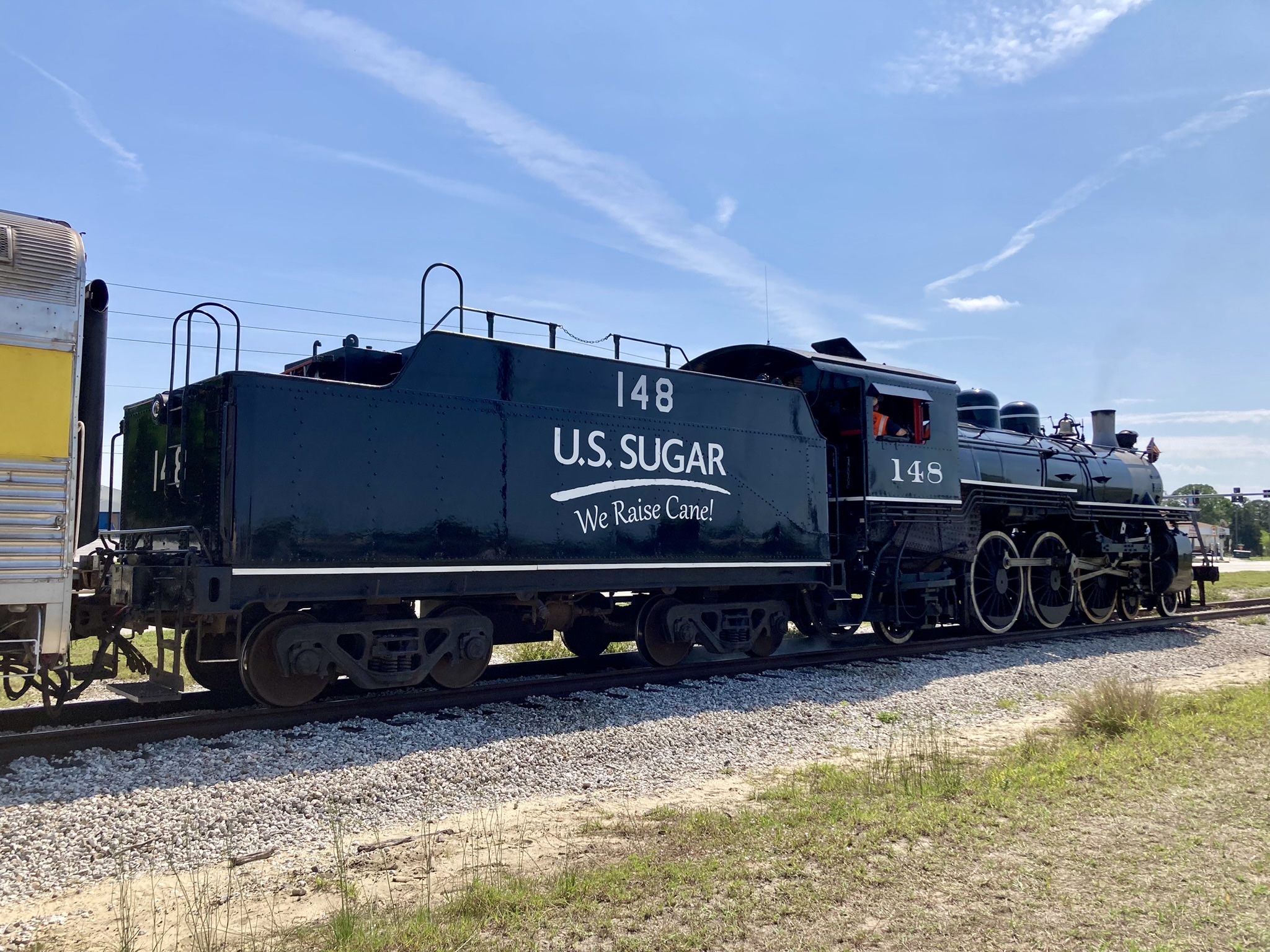
Welcome back to #TravelThursday. This past Sunday afternoon I took a fun 2-hour / 46-mile train ride aboard the Sugar Express. It was my first such train ride here in the U.S. in my lifetime. I didn’t really know what to expect with it until it actually occurred.

I picked-up the train at the Highlands County Fairgrounds adjacent to the Alan Jay Arena across from Sebring High School near downtown Sebring Florida. U.S. Sugar actually owns and operates the railroad track that runs adjacent to the Fairgrounds, and we stayed exclusively on their railroad track (also known as the “South Central Florida Express“) for all 23 miles southward and then back northward.

Passengers were already aboard the train over an hour before our 2 PM departure. (I got there early too – surprised that so many others got there even earlier than I.)

The train departed on-time at 2 PM, and we began our slow southward trek towards south of Lake Placid. One of the most surprising things that occurred throughout much of the trip were people (I believe mostly locals who know the train schedule) getting out of their vehicles and taking pictures and recording our train as it passed by. (Lots of tripods were setup.) This occurred at street crossings and adjacent to neighborhoods and businesses where people came out of homes and stores to record us and wave at us. (And many of us waved back.) The scenery was beautiful on a sunny Sunday afternoon – from natural unspoiled Florida scrub to abundant orange groves to sandy hills to picturesque lakes around Lake Placid. It was interesting to see such a diverse and different part of my hometown county that I never see while driving 55 to 65 MPH along U.S. 27.

We arrived in the area south of Lake Placid known as Childs. It’s a sugarcane loading site between train and truck for U.S. Sugar. The train came to a stop for a moment, tested its brakes, and then began slowly moving back northward for the return trek to Sebring.

This was a fun ride. Customer service all around was outstanding. They actually made two trips back and forth through the passenger cars with complimentary bags of chips and cookies – far more than you get on a standard airplane in coach. You also get unlimited Zephyrhills bottled water out of a well-stocked cooler. They even pick-up your trash after you’re done. You’re able to walk through all of the passenger cars at your leisure – even while the train is moving. They sell souvenirs in one of the cars. The top speed of the trip was just shy of 40 MPH (outside of both Sebring and Lake Placid); although, for much of the trip it averaged from 15 to 30 MPH. The ride was mostly smooth except when it reached top speed when it got a little bit “jerky”. It’s got a nostalgic feel to it with original passenger cars from the 1950s, and continuous big band music from the 1940s playing throughout the sound system.

Next #TravelThursday – I’ll look back at the cloudy and dreary and rainy and chilly El Niño Winter of 2023-2024 here in the Heartland of Florida. Let’s keep traveling together.

All rights reserved (c) 2024 Christopher M. Day, CountUp