Categories
Blogging Driving Geography Military Nature Photography Travel Weather

Casey Key, Siesta Key, Sarasota Florida

Welcome back to #TravelThursday. Last week I wrote about my Tuesday afternoon and evening in June in Venice and Laurel / Nokomis Florida. And the trek continues the next morning.

I started my Wednesday morning by driving the final mile westward to the Gulf Beaches along Albee Road. I made a right onto Casey Key Road – which Google Maps did not want me to do (based on my eventual destination). Was Casey Key Road a private road ? Was it damaged and impassible somewhere along the way ? I would soon find out on this exploration trek.

I drove for a little over 4 miles along narrow and winding Casey Key Road. It’s essentially a sandy neighborhood road past quite expensive multi-million-dollar houses surfside. Many of the houses suffered damage from last year’s hurricanes (Helene and Milton), and they were being repaired or rebuilt.

After that slow (15 to 25 MPH) neighborhood drive-thru I headed inland (eastward) along Blackburn Point Road to U.S. 41 (Tamiami Trail).

Heading northward on U.S. 41 – I made a left (westward) onto Sarasota County Road 72 – which is the far-western extension of Florida State Road 72. (I’ll write more about the State Road next week.)

At the end of the road – I made a right onto Midnight Pass Road (unique name with a unique history – see next paragraph) – and I was officially on Siesta Key for the first time ever. I continued onto Beach Road, and I parked my car at the main parking lot at Siesta Beach.

Fun Fact: Casey Key (to the south) and Siesta Key (to the north) are actually connected to each other, but you can’t drive between the two keys (barrier islands). You can walk though. Where the two keys meet is a very narrow strip of land that disappears sometimes due to hurricanes and tropical storms that move through the region. When the sea overtakes the land – it creates a new inlet called Midnight Pass – and sometimes that inlet is in a different place than previously. (It migrates back-and-forth.) From my understanding – developers want it closed (no pass). Locals want it open (pass). Ultimately – Mother Nature decides when and where Midnight Pass appears.

I walked across the street, and I waited at the trolley stop for a few minutes for the free trolley to arrive. This was a carefully and extensively researched and studied initiative for several weeks beforehand to take the Breeze Siesta Islander (Route 77) trolley from Siesta Key to and from downtown Sarasota. The trolley is extremely popular with visitors during the peak Fall, Winter, and Spring tourist seasons. In the summertime – the locals mostly use it. The trolley ride to downtown Sarasota was uneventful. It wasn’t narrated, as it’s not a sightseeing trolley. It’s Sarasota County (Government) transportation.

I took the trolley to Bayfront Park. It was my 2ND visit ever. (My first was in February 2014.) I did a lot of walking and photographing there. It’s very picturesque in every direction.

I then walked down the street (Bayfront Drive) to Marie Selby Botanical Gardens. I was last there the same day in February 2014 that I last visited Bayfront Park. Again – lots of great pictures were captured during my approximate 90-minute visit amidst nature’s beauty.

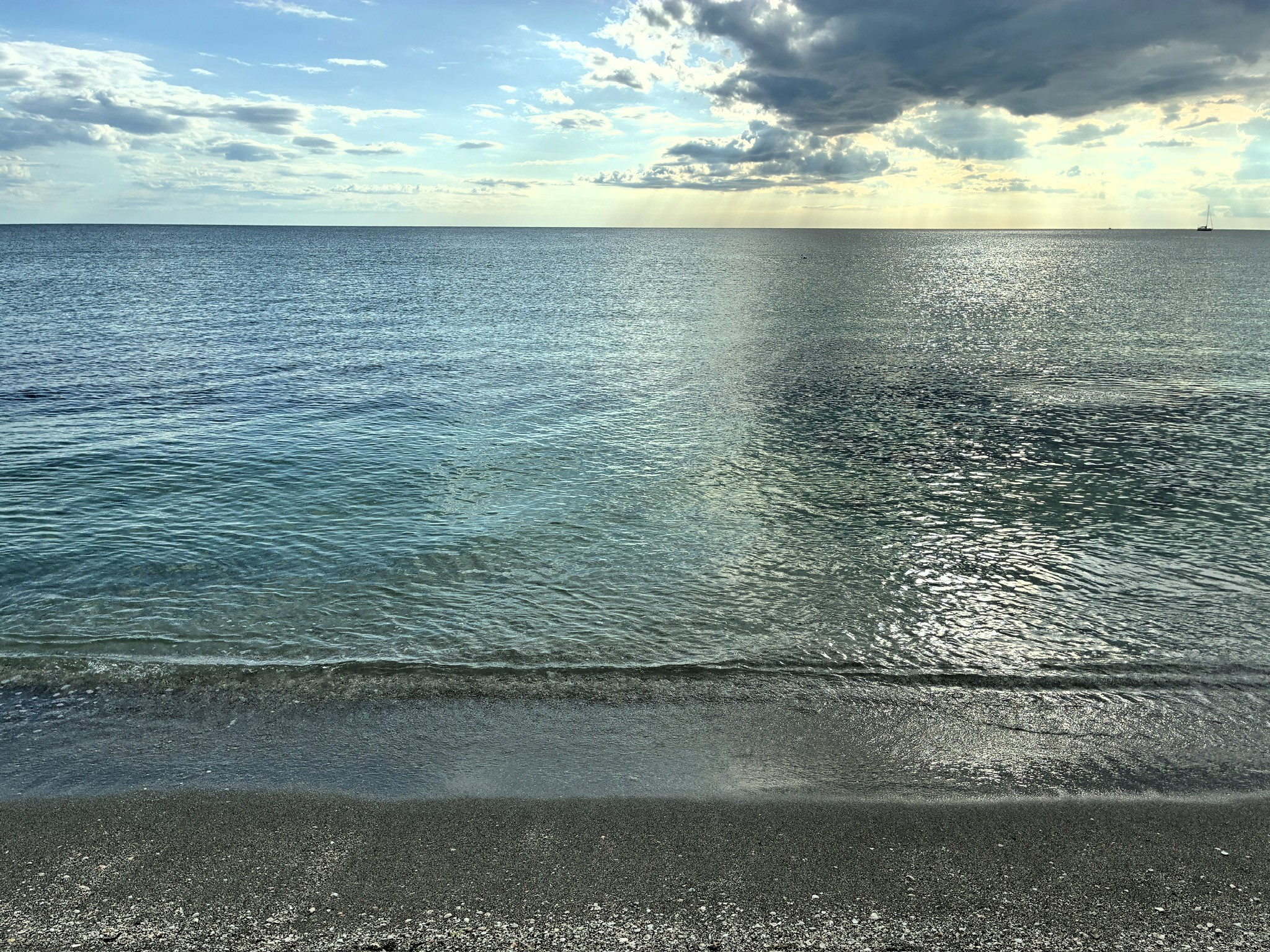
I picked-up the free trolley right in front of the Botanical Gardens, and I took it back to my car in front of Siesta Beach. I then walked over to the beach to check it out. I was unimpressed by all of the hype that I’ve heard over the years regarding Siesta Beach. The beach was packed like sardines with thousands of (I’m guessing) locals under umbrellas, tents, and other coverings. You couldn’t even see the Gulf due to the sheer number of people and obstructions from end to end. So I essentially turned around and went away – away to a nicer less crowded beach.

Next #TravelThursday I’ll write about that beach, as well as my final dinner on this trip. I’ll also write about my trip back home. Let’s keep traveling together.

All rights reserved (c) 2025 Christopher M. Day, CountUp
Categories
Blogging Driving Food Geography Military Television Travel Weather

Venice + Nokomis Florida

Welcome back to #TravelThursday. Last week I wrote about my morning drive from Sebring to downtown Arcadia, and then from there down to the end of U.S. 17 in Punta Gorda to visit the Military Heritage Museum. And the trek continues on that Tuesday in June.

I headed north via Tamiami Trail (U.S. 41) out of Punta Gorda, across Charlotte Harbor, through Port Charlotte, out of Charlotte County, and into Sarasota County.

My next stop was the Venice Museum, and it was a second-time visit. My first visit was 6 years earlier in May 2019. This time I actually talked museum business with the friendly docent at the front desk. I revealed myself as a fellow museum volunteer, Social Media Director, and on the Board Of Directors. We had a good discussion about things that are working, and things that are not working. They have a modern museum there with lots of fun bells and whistles. Like my museum – they are open 3 days a week – Mondays, Tuesdays, and Wednesdays – from 10 AM to 4 PM. During the busier Fall, Winter, and Spring seasons they are also open on the 1ST and 3RD Saturdays of the month from 11 AM to 3 PM. They are owned and operated by the city of Venice Florida.

My next stop was my hotel for the next 2 nights in Laurel Florida – an unincorporated census-designated place (UCDP) adjacent to Nokomis – another such UCDP. My hotel and the hotel across the street both had Nokomis street addresses and Nokomis in their name, so for the purposes of this blog – I spent 2 nights near Nokomis. (Both Laurel and Nokomis have rich histories that date back to settlers in the late-19TH Century.)

For dinner I headed a couple of miles south back into Venice to Darrell’s Restaurant – which I also ate at 6 years earlier in May 2019. The place was busy and getting busier. The service was good. The food was great. I ordered a sweet tea with the “Pulled Piggy” – a half-pound of hand-pulled pork with two sides of my choice. I chose mashed potatoes and gravy and collard greens. Cornbread completed the meal. And it was a hearty meal, but not too big that I couldn’t handle; although, it took some time to enjoy it all. Any future trip to Venice will include another visit to Darrell’s.

After dinner I headed west to the beach – where I spent a lot of time when I vacationed across the street from the beach 6 years earlier. I thought to myself while walking on the beach that it was perhaps my favorite beach in the world. (It used to Fort Myers Beach.)

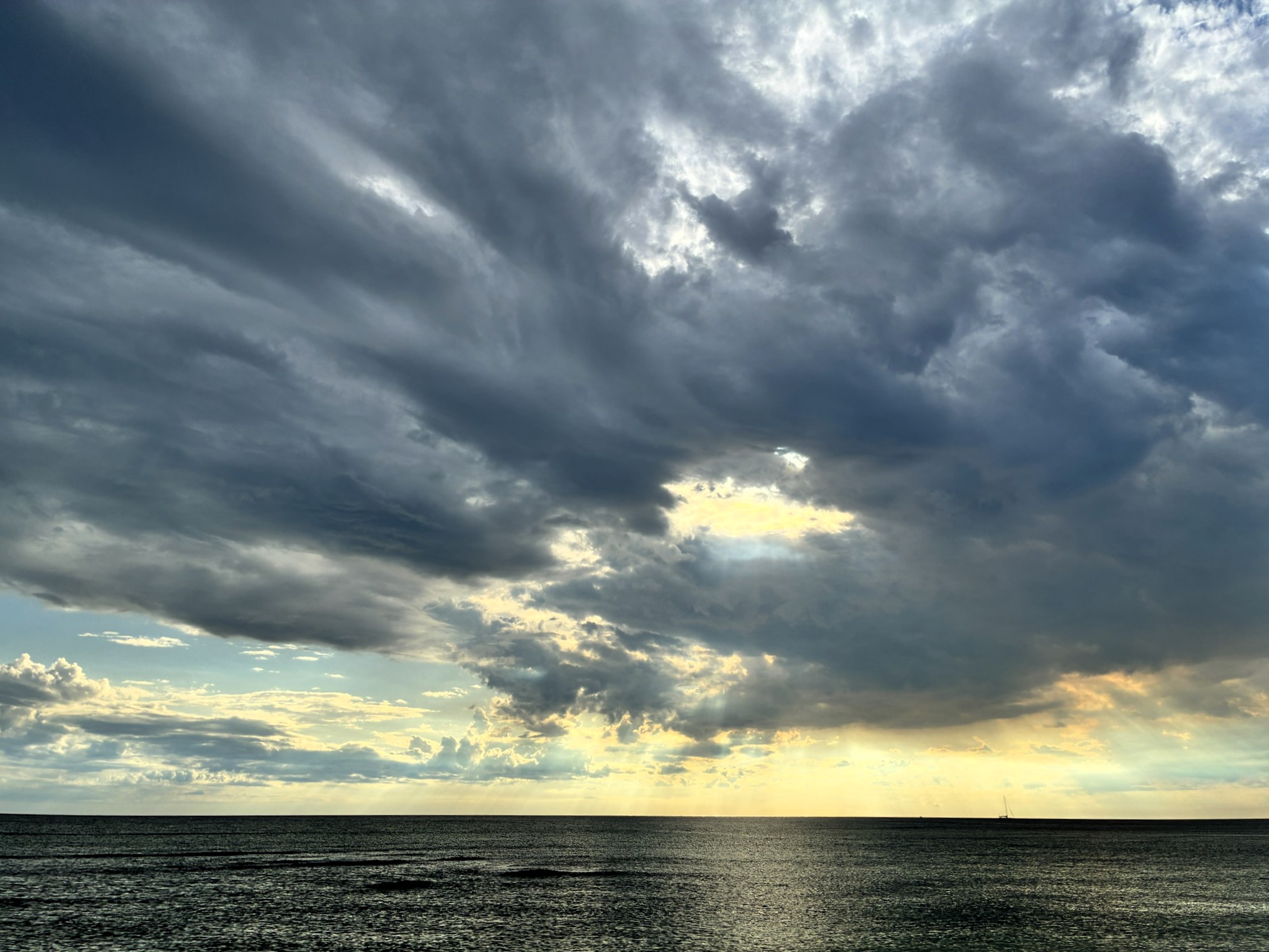
Sunset was at 8:28 PM that night (the latest of the year), but there was little to no chance that a visible sunset would actually appear on the horizon due to leftover thunderstorm clouds in the sky. I spent 35 minutes on the beach, and then I headed back to my hotel near Nokomis. After all – “America’s Got Talent” would start at 8 PM.

Next #TravelThursday I’ll write about Casey Key, Siesta Key, and Sarasota – including my fascinating ride on the trolley. Let’s keep traveling together.

All rights reserved (c) 2025 Christopher M. Day, CountUp
Categories
Blogging Geography Health Home Travel Weather

Walking Around The Neighborhood

Welcome back to #TravelThursday. Last week I wrote about our cold winter season here in Sebring Florida – in which we experienced 50 cold mornings with lows in the 30s or 40s, and 19 cold afternoons in the 40s, 50s, and 60s. It was my coldest winter season in over 30 years !

It certainly affected my walking this past season – both positively and negatively. I won’t walk when it’s too cold out. I generally won’t walk when the temperature is below 60°F / 16°C, so if it’s cold in the morning then I’ll walk in the afternoon. If it’s hot in the afternoon then I’ll walk in the morning. If it’s cold all day long then the walking can wait.

My season of walking started on the 19TH of September of 2024, and it ended on the 06TH of June. Here are the number of times I walked around my neighborhood in each month: September (3), October (10), November (3), December (13), January (10), February (10), March (15), April (12), May (10), and June (4).

My goal for this season was to walk more times than last season (2023-2024). I walked 87 times last season, and I made it to 90 walks this season. Goal met. Actually – my goal may have been to reach 100 walks. Didn’t make it. I’ll blame it on our cold weather in January. I also failed to surpass the number of miles I walked last season. I walked 109.72 miles this season – versus 113.50 miles last season. The average length of my walks was a bit shorter this season (1.22 miles) versus last season (1.30 miles).

Next season will be Season 19 of my neighborhood walks. Season 1 was 2007-2008, and you can read about my very first walk here. Season 19 will probably start in September when we start getting some cooler mornings here with the return of cold fronts from the north. My goal will be 100 walks and more miles than this season – and last season. I’ll try for 125.

#ButWait – Our local Performing Arts Center a couple of miles up the road is opening their doors every Tuesday, Wednesday, and Thursday from 10 AM to 2 PM for people like me to come in out of the heat and get their steps in amongst air-conditioned comfort. You can basically walk around their 1,460-seat venue (excluding the stage). That actually sounds like fun. I may participate once or twice or more. (Those walks will not count towards my seasonal numbers.)

Next #TravelThursday I’ll write about my recent Flag Day / Father’s Day Weekend visit back to Homestead Florida. Let’s keep traveling together.

All rights reserved (c) 2025 Christopher M. Day, CountUp

Categories
Blogging Driving Geography Home Travel Weather

Sebring Florida’s Cold Winter Of 2024-2025

Welcome back to #TravelThursday. This week it’s a change-of-pace blog post. Here in Sebring Florida our wintertime population increases exponentially from the summertime – perhaps even doubling or even more. In my 55+ neighborhood we are about 35% year-round residents and 65% “snowbirds” – our endearing term for our friends and neighbors who fly (or drive) south for the winter. They come from the north (many from the Great Lakes States) to all over Florida – especially Central and South Florida – along both coasts and down the spine. They come for our weather in-between hurricane seasons.

Some of our snowbirds arrive as early as September and depart as late as May. The majority are here from December to March with January and February being peak season. It gets busy around here from about Thanksgiving to about Easter, and especially after the New Year !

Our coldest months up here in the Highlands of South-Central Florida are December, January, and February. Our average afternoon high temperatures are in the low-70s, and our average morning low temperatures are in the mid-50s. A cold day is when we don’t reach 70°F / 21°C. A cold night is a night in the 40s / below 10°C. We are generally warmer during the day and colder during the night than our neighbors at both coasts some 80 miles away.

This past winter season we had 19 cold days when we did not reach 70°F. 14 of them occurred in January – including a brutal stretch of 6 days in a row from the 20TH to the 25TH – when on a couple of days – we couldn’t get out of the 50s – and on one day – we were stuck in the 40s all day. In fact – we were stuck in the 40s for 46 hours in a row. I briefly thought about flying to the U.S. Virgin Islands during that Arctic blast.

We also had 50 cold nights when we were into the 40s (and 30s too). 4 were in November, 12 in December, 23 in January, 2 in February, and 9 in March. January was a very cold month indeed with 4 mornings into the 30s. In fact – it was one of the Top 10 coldest Januarys in modern recorded history – and the coldest in 15 years !

It was my 2ND full winter season here in Sebring Florida. (I moved here at the end of the 2022-2023 season.) I previously lived in Homestead Florida for 36 winter seasons. Down there we averaged less than 20 cold days and nights combined per season (compared with 60 to 70 combined days and nights here).

I know that those cold days and nights are just about 5 months away, and the snowbirds – well – they will be heading back here to their winter homes starting in less than 3 months.

We’re in our 4-month rainy season now. That’s when about 70% of our annual rainfall occurs. We’re also in our 6-month hurricane season. That started on June 01ST and continues until November 30TH with peak season being September and October. Hopefully the rain will fall (we’re recovering from a severe drought), but the hurricanes will stay out at sea.

Next #TravelThursday I’ll recap my walking season. Let’s keep traveling together.

All rights reserved (c) 2025 Christopher M. Day, CountUp