Categories
Blogging Driving Geography Military Nature Photography Travel Weather

Casey Key, Siesta Key, Sarasota Florida

Welcome back to #TravelThursday. Last week I wrote about my Tuesday afternoon and evening in June in Venice and Laurel / Nokomis Florida. And the trek continues the next morning.

I started my Wednesday morning by driving the final mile westward to the Gulf Beaches along Albee Road. I made a right onto Casey Key Road – which Google Maps did not want me to do (based on my eventual destination). Was Casey Key Road a private road ? Was it damaged and impassible somewhere along the way ? I would soon find out on this exploration trek.

I drove for a little over 4 miles along narrow and winding Casey Key Road. It’s essentially a sandy neighborhood road past quite expensive multi-million-dollar houses surfside. Many of the houses suffered damage from last year’s hurricanes (Helene and Milton), and they were being repaired or rebuilt.

After that slow (15 to 25 MPH) neighborhood drive-thru I headed inland (eastward) along Blackburn Point Road to U.S. 41 (Tamiami Trail).

Heading northward on U.S. 41 – I made a left (westward) onto Sarasota County Road 72 – which is the far-western extension of Florida State Road 72. (I’ll write more about the State Road next week.)

At the end of the road – I made a right onto Midnight Pass Road (unique name with a unique history – see next paragraph) – and I was officially on Siesta Key for the first time ever. I continued onto Beach Road, and I parked my car at the main parking lot at Siesta Beach.

Fun Fact: Casey Key (to the south) and Siesta Key (to the north) are actually connected to each other, but you can’t drive between the two keys (barrier islands). You can walk though. Where the two keys meet is a very narrow strip of land that disappears sometimes due to hurricanes and tropical storms that move through the region. When the sea overtakes the land – it creates a new inlet called Midnight Pass – and sometimes that inlet is in a different place than previously. (It migrates back-and-forth.) From my understanding – developers want it closed (no pass). Locals want it open (pass). Ultimately – Mother Nature decides when and where Midnight Pass appears.

I walked across the street, and I waited at the trolley stop for a few minutes for the free trolley to arrive. This was a carefully and extensively researched and studied initiative for several weeks beforehand to take the Breeze Siesta Islander (Route 77) trolley from Siesta Key to and from downtown Sarasota. The trolley is extremely popular with visitors during the peak Fall, Winter, and Spring tourist seasons. In the summertime – the locals mostly use it. The trolley ride to downtown Sarasota was uneventful. It wasn’t narrated, as it’s not a sightseeing trolley. It’s Sarasota County (Government) transportation.

I took the trolley to Bayfront Park. It was my 2ND visit ever. (My first was in February 2014.) I did a lot of walking and photographing there. It’s very picturesque in every direction.

I then walked down the street (Bayfront Drive) to Marie Selby Botanical Gardens. I was last there the same day in February 2014 that I last visited Bayfront Park. Again – lots of great pictures were captured during my approximate 90-minute visit amidst nature’s beauty.

I picked-up the free trolley right in front of the Botanical Gardens, and I took it back to my car in front of Siesta Beach. I then walked over to the beach to check it out. I was unimpressed by all of the hype that I’ve heard over the years regarding Siesta Beach. The beach was packed like sardines with thousands of (I’m guessing) locals under umbrellas, tents, and other coverings. You couldn’t even see the Gulf due to the sheer number of people and obstructions from end to end. So I essentially turned around and went away – away to a nicer less crowded beach.

Next #TravelThursday I’ll write about that beach, as well as my final dinner on this trip. I’ll also write about my trip back home. Let’s keep traveling together.

All rights reserved (c) 2025 Christopher M. Day, CountUp

Categories
Blogging Bugs Driving Geography History Home Military Nature Travel

Florida Medal Of Honor Memorial

Welcome back to #TravelThursday. This week I’m writing about my first-time visit a little over 3 weeks ago to our newest museum right here in my hometown of Sebring Florida. It’s the Florida Medal Of Honor Memorial.

Their Mission is “to honor and preserve the legacy of Florida Medal of Honor recipients through education, leadership, and inspiring displays, ensuring their courage and sacrifice are never forgotten.”

24 Medal of Honor recipients are Floridians – including our very own Major Thomas “Mickey” McGuire Jr. (1920-1945; Sebring High School Class of 1938). Check out his displays inside the Visitors Center.

What a wonderful Memorial (outside) and a beautiful Visitors Center (inside). It’s a fantastic addition to downtown Sebring, and as a Director of a neighboring historical museum – I welcome them to the family. I went home that night, and the next day I wrote them a check to cover a 5-year membership for myself. I want to be part of their growth and evolution. I want to support them in any way that I can.

Fun Fact: Surrounding the museum and the memorial are mostly (90%) native Florida plants – over 650 of them – including over 40 species. The plants were selected based on their colors, textures, and interactions with wildlife – attracting and supporting local butterflies, birds, and beneficial insects.

They are located at the corner of South Commerce and South Eucalyptus in downtown Sebring – 0.4 miles from our Circle – right next to the Highlands County Government Center. They are open 5 days a week – Tuesdays to Saturdays – from 10 AM to 4 PM. In addition to their official web site (hyperlinked above) – you can check them out on both Facebook and X.

Mama Told Me Not To Come, but The Show Must Go On, so we’ll Shambala An Old Fashioned Love Song Out In The Country – at least this One time, so that there is Joy To The World for the Black And White – next – #TravelThursday. Let’s keep traveling together.

All rights reserved (c) 2025 Christopher M. Day, CountUp

Categories
Animals Blogging Bugs Driving Geography Holidays Home Nature Travel

Archbold Biological Station

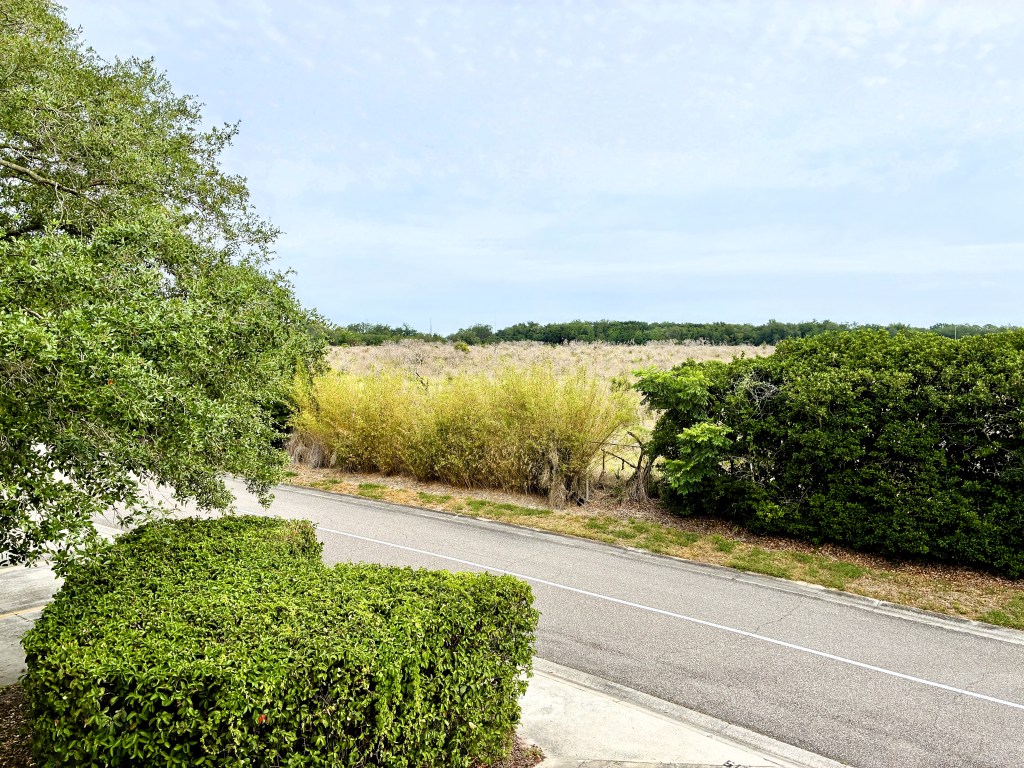
Welcome back to #TravelThursday. There’s a large tract of land directly to the north of my neighborhood that’s unspoiled raw Florida scrub. I have a great view of it out my second-floor side and front windows. I bet it looks exactly the same now as it did 25 – even 50 years ago – probably even more than that. It’s what my neighborhood probably looked like before 1985 – when the land was cleared, and construction began. I love living on the other side of our perimeter fence from that scrub. I often stare at it for minutes – watching the nature and the wildlife that prospers there. It’s like living right next door to a nature preserve. I hope it stays like that for the rest of my life.

A couple of Wednesdays ago on New Year’s Day Morning I had the opportunity to finally visit the Archbold Biological Station 30 miles away down in the southern end of my home county – Highlands. It’s about a mile-and-a-half west of U.S. 27, so I’ve driven by it dozens of times. It was my first time there. For several years I thought that it was closed to the general public, but then I realized that they actually have a small Learning Center there along with public nature trails nearby.

They hosted a “First Day Hike” along some of the private (unmarked) nature trails (for research use only). I figured I’d be 1 of 5 visitors to participate early on the first morning of 2025, but surprisingly there were at least 25 of us (several families with children) along for the hike through the protected Florida scrub. Our tour guide pointed out various insects, birds, animal tracks, and vegetation along the sandy trails. We walked through prescribed burn areas, as well as non-burn areas.

Our part of South-Central Florida is the oldest land south of the Florida Panhandle. A long time ago – back when sea levels were as much as 150 feet higher than they are now – only this area – the narrow high spine of Florida – was above water – as a series of islands – resembling today’s Florida Keys. Everything to the south, east, and west was the sea. The sand that dominates our landscape – visible from space – is ancient sand leftover from that era. Some of our vegetation can be found nowhere else in Florida. I guess I don’t need to explain how Highlands County got its name.

It was a fun “First Day Hike” through the scrub. We walked about a mile-and-a-half total during the informative 2-hour tour. It was a great way to start the new year in an educational and physical way.

Next #TravelThursday – It’s a change-of-pace. I’ll do a little bit of reminiscing. I’ll write about me and my family getting ready to make a move 50 years ago. Let’s keep traveling together.

All rights reserved (c) 2025 Christopher M. Day, CountUp

Categories
Blogging Driving History Nature Travel

Ah-Tah-Thi-Ki

Welcome back to #TravelThursday. Earlier this month a small group of us took a bus trip down south by a little over 100 miles to southeastern Hendry County. We visited the Ah-Tah-Thi-Ki Museum and their annual American Indigenous Arts Celebration on their exterior grounds across the street from the Museum. They are located on the Big Cypress Reservation about 18 miles north of the Alligator Alley portion of I-75 (exit 49). They are owned and operated by the Seminole Tribe Of Florida. It was my first-ever visit to the Museum and local area.

This is one of those hidden gems in South Florida that I really didn’t know anything about until our Sebring Historical Society announced it as an upcoming bus trip that I promoted during the month of October on our Facebook page (which I’m the Administrator of).

There were a lot of singing and dancing performances – and food and merchandise vendors at the Celebration. The Museum (inside) was modern and fascinating. As I slowly walked through it – I was getting educated on the history of the local area and the Seminole Tribe Of Florida. I was also dreaming of how our own Museum (present and potential future location) could incorporate a lot of what I was seeing presented there. I also walked the mile-long elevated boardwalk behind the Museum. It loops around a 60-acre natural cypress dome.

We spent 4½ hours at Ah-Tah-Thi-Ki. With the 2-hour bus trip each way – it was a fun 8½-hour day with my museum friends and fellow history fans. Our next fun bus trip is a little over 2 weeks away – to historic downtown Bartow Florida in Polk County (our neighbor to the north).

Next #TravelThursday – I’m in Texas. Let’s keep traveling together.

#CountUp & #TravelThursday is on Facebook. I usually post there on Mondays and Thursdays.

All rights reserved (c) 2024 Christopher M. Day, CountUp